We are hoping to begin filming this Thursday, the 15th of December.
Tuesday, 13 December 2011

Tuesday, 6 December 2011
Band members
James Korolus - Lead singer

Conor Rutland - Singer/guitarist

Zak Kenny - Guitarist

James Blake - Bass guitar

Callum Woods - Drums


Conor Rutland - Singer/guitarist

Zak Kenny - Guitarist

James Blake - Bass guitar

Callum Woods - Drums

Filming update
We were due to undergo our first stages of filming yesterday, but due to a band member being ill we were forced to delay filming. We have however organised for filming to take place either Wednesday, Thursday or Friday next week.
Wednesday, 30 November 2011
Monday, 28 November 2011
Mod Youth Culture
Mods (modernist) is a youth culture that originated in London, in 1950s and peaked in the early-to-mid 1960s. A revival was also sparked in the 1970's, brought about in some way, by the film Quadrophenia (1979).
 Significant elements of the mod subculture include fashion (often tailor-made suits); music, including African American soul, Jamaican ska, British beat music, and R&B; and motor scooters. The original mod scene was also associated with amphetamine-fuelled all-night dancing at clubs.
 From the mid-to-late 1960s and onwards, the mass media often used the term mod in a wider sense to describe anything that was believed to be popular, fashionable, or modern.
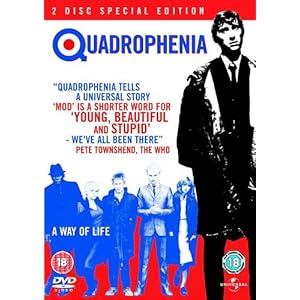
We believe that the mod culture could be a reaction to the rocker culture which was established in the same period (1950's), although it could also have been a reaction to a lack of freedom, and becoming a mod meant they could be part of a group and be their own person.
Filming
After speaking with the band, it has been arranged that we will begin filming on Thursday the 1st of December. This however is subject to change so we will keep you notified regarding any changes.
Tuesday, 22 November 2011
Transitions
During the song, there will be two types of vocals used. These are 'screamed' vocals, and 'clean' vocals. As this is a metal core song, the screamed vocals with occur more frequently. An example of this is shown during verse 2.
"I'm sick of plain corpses crash and burn, no face no recognition
Just empty eyes and clotted blood, with no expression
from new born child to rotting man, to just conceived make the incision
sign here to have your name engraved in bold, in f'ing bold"
And an example of where clean vocals will appear is in the chorus:
"I am, I am the watch tower
I watch, but I only watch them die
the irony is that i'm suicidal
but I cant jump off myself "
This mix between tones is very popular amongst metal core songs. In addition to this, metal core songs can often be described as 'out of control', which often relates to the 'screaming' tones we hear in a song. We have decided to relate these tones to our filming by perhaps shooting in an out of control manner when we hear this tone, and then calming it down during the chorus of the watchtower. These screaming tones are popular amongst heavy metal songs, but the addition of calm notes compliment the genre of metal core.
Monday, 21 November 2011
Music video comparisons
This music video 'your betrayal' by Bullet For My Valentine shows similar transitions between shots to which we are looking to add in our music video. In addition to this, due to the nature of the genre of metal core, the speed of the cuts between shots are also similar to what we hope to include in our video music.
We see multiple examples of quick cuts between members of the band playing their separate instruments, and this compliments the genre of metal core. Also, the lighting has also been changed to a dull, reddish colour, which i believe shows fear and blood. These are both factors of heavy metal, which is something we have addressed and are looking to include in our music video.
The positioning of the band is also something similar to what we hope to include in our music video. The main singer is located at the front, and is the focus of attention. In addition to this, the drummer is located at the back, and despite being at the back, he appears to be in control of the band due to the dominance of size compared to the other members.
Finally, this music video has multiple examples of close-up shots onto the separate members of the band, which is something we hope to include in the opening scene of our music video.
Tuesday, 15 November 2011

How are youth represented in British cinema?
In British cinema, the youth are often portrayed as rebels against society. I will examine how this is done through the films human traffic, lonlieness of a long distance runner and the television prgramme spaced.
In Human traffic, authority figures, such as Jips mum, are shown in a completley different way to the youth of society. For example, when we first see Jips mum, she stands where the camera can see more of her compared to her son Jip. In addition to this, when he begins a conversation with his mum, he is often seen fiddling with his hair, avoiding eye contact and looking nervous. This indicates that Jip doesn't want to be there. This straight away gives the audience the impression that Jips mum is in command. It is seen as cultural hegemony to obey your parents, and in a way Jip does this. He initiall wants to be "in and out in 5 minutes", but instead is persuaded to stay until his mum is finished with her client. However, although obeying her, he isn't best pleased about this, which indicates that he is outside of cultural hegemony.
In addition to this, Jip is also shown to hate his job, something which the majority of the youth in Britain are seen to do. During one scene, Jip is seen as being raped by his boss, and he has no control and cannot retaliate. thos shows two things about cultural hegemony, one Jip has no control in his job, and two, he is exploited through work.
We also see Moff, and his relationship with his father. Moffs Dad is a policeman, which is ironic due to Moffs drinking and drug issues. Moffs father is constantly arguing about Moff not having a job, which is a social norm. He goes on to say "you don't even have a girlfirend!", again, something which is expected by society. The fact that Moffs father is an authority figure through his own job further illustrates the importance of Moff getting a job.
The importance of having a job in the television prgramme Spaced is also shown. For example, we often hear the phrase "making the best of the situation". This shows the importance of having a job, and you must have one even if you don't enjoy it. This is something which is very common in society, where people only keep their jobs for money or just to be accepted by society. The idea of "making the best of it" is shown in a clip where Mike, a lollipop man, is seen as being aggresssive and in command, almost in a miltary fashion, when he is helpiong to help school children cross the road.
The Loneliness Of A Long Distance Runner shows authority figures as being big, commanding and well respected. We see the idea of respecting authority figures when the boys are standing in linesm, and reply to these authority figures with the word 'sir'. The boys all obey these figures untill one of the men approaches Smith, and tells him to go on his regular run. Smith then goes on to leave the 'cage', which indiactes that the youth cannot be trusted by their elders and must stay under serveillance. When Smith breaks this cultural rule by leaving the cage, we hear jazz music, something which was seenn as being outside cultural hegemony at the time.
Overall, the three examples all show different ways of representing British youth. Human traffic shows them as not aknowledging the cultural rules, Spaced shows individuals as not enjoying a job, but just getting on with it, and Loneliness Of A Long Distance Runner shows the youth as obeying authority figures, despite previously not having done so. Just by looking at some of the cultural 'rules' in society, and how the youth react to them, we can see an indication of how they act in society.
In Human traffic, authority figures, such as Jips mum, are shown in a completley different way to the youth of society. For example, when we first see Jips mum, she stands where the camera can see more of her compared to her son Jip. In addition to this, when he begins a conversation with his mum, he is often seen fiddling with his hair, avoiding eye contact and looking nervous. This indicates that Jip doesn't want to be there. This straight away gives the audience the impression that Jips mum is in command. It is seen as cultural hegemony to obey your parents, and in a way Jip does this. He initiall wants to be "in and out in 5 minutes", but instead is persuaded to stay until his mum is finished with her client. However, although obeying her, he isn't best pleased about this, which indicates that he is outside of cultural hegemony.
In addition to this, Jip is also shown to hate his job, something which the majority of the youth in Britain are seen to do. During one scene, Jip is seen as being raped by his boss, and he has no control and cannot retaliate. thos shows two things about cultural hegemony, one Jip has no control in his job, and two, he is exploited through work.
We also see Moff, and his relationship with his father. Moffs Dad is a policeman, which is ironic due to Moffs drinking and drug issues. Moffs father is constantly arguing about Moff not having a job, which is a social norm. He goes on to say "you don't even have a girlfirend!", again, something which is expected by society. The fact that Moffs father is an authority figure through his own job further illustrates the importance of Moff getting a job.
The importance of having a job in the television prgramme Spaced is also shown. For example, we often hear the phrase "making the best of the situation". This shows the importance of having a job, and you must have one even if you don't enjoy it. This is something which is very common in society, where people only keep their jobs for money or just to be accepted by society. The idea of "making the best of it" is shown in a clip where Mike, a lollipop man, is seen as being aggresssive and in command, almost in a miltary fashion, when he is helpiong to help school children cross the road.
The Loneliness Of A Long Distance Runner shows authority figures as being big, commanding and well respected. We see the idea of respecting authority figures when the boys are standing in linesm, and reply to these authority figures with the word 'sir'. The boys all obey these figures untill one of the men approaches Smith, and tells him to go on his regular run. Smith then goes on to leave the 'cage', which indiactes that the youth cannot be trusted by their elders and must stay under serveillance. When Smith breaks this cultural rule by leaving the cage, we hear jazz music, something which was seenn as being outside cultural hegemony at the time.
Overall, the three examples all show different ways of representing British youth. Human traffic shows them as not aknowledging the cultural rules, Spaced shows individuals as not enjoying a job, but just getting on with it, and Loneliness Of A Long Distance Runner shows the youth as obeying authority figures, despite previously not having done so. Just by looking at some of the cultural 'rules' in society, and how the youth react to them, we can see an indication of how they act in society.
Monday, 14 November 2011


Band filming - Contact with fear the unknown
After our latest post in which we recieved a reply from Taverham High School, we have got into contact with FEAR THE UNKNOWN in order to try and find a suitable date and time in order to shoot the video.
We shall keep you updated on our progress.
We shall keep you updated on our progress.
Tuesday, 8 November 2011
Test shots - Lighting and Colouring
Here are some test shots of lighting and colouring.
Alex Jarvis A2 Media Blog: Test shots - Lighting and Colouring: This is just a simple test shoot showing the ideal colouring and lighting that we will be using in our music video. It is also a chance fo...
Alex Jarvis A2 Media Blog: Test shots - Lighting and Colouring: This is just a simple test shoot showing the ideal colouring and lighting that we will be using in our music video. It is also a chance fo...
Equipment list
Camera 1

Sony handy cam, HDV, 108i/min DV

Although this type of camera is not as good as the CMOS camera, they are still useful, and we will be using either 1 or of these cameras, dependent on how many of the CMOS cameras we can use.
Tripod
Manfrotto tripod, (190 x B)

We will be using the tripod within all of our shots bar one, the reason for this being that we would like no movement for most of the shots. Keeping the footage calm for the audience to view would increase their profile, this being one of the key attributes to an up and coming band like FEAR THE UNKNOWN. We will be using as many tripods as there are cameras for our filming.
Thursday, 3 November 2011
Media addiction
According to http://www.sethbarnes.com/?filename=media-addiction-is-killing-us-in-7-ways media addiction consists of seven seperate stages.
News - We aim to stay informed by watching the news, and it has as huge impact on the way we think.
Noise - We grow accustomed to a back drop of noise, for example, through an ipod or television, which in turn causes us to think less.
Moral decay - Our morality is under steady assault by an entertainment industry pushing sex, violence, and profanity.
A.D.D - The amazing number of media options available to us turns us into a nation of A.D.D. channel-flippers who can't focus on anything for very long.
Mind-numbing - We are diverted from the life-giving, creative activities like a long conversation or playing make-believe (both as children and as adults). We trade the interactive right-brain activities for passive, mind-numbing, left-brain activities.
Poor people skills - Our children are spending more time in "virtual relationships" online than in real ones. We're watching a generation growing up with poor people skills. When we interact with people in real life, we perceive them three ways: body, soul, and spirit. Over the web, we just exchange information, and the data we do exchange is often reduced to dull sound-bite-sized packets that convey little. Myspace is impoverishing our children, rendering them ever more superficial.
Bad decision making - The "un-delete" button on our computers is protecting kids from the consequences of their actions. By protecting a generation from the effects of its folly, we are filling the world with fools. This subtly feeds a relativistic perspective that calls into question absolute truth.
Legislation
Personally, I feel that it is up to the parents of a child to legislate how often they play a game, or what games they play. The issue of violence in games however should not be an issue due to the age restrictions on games, however parents should moniter what games their child are buying. In order to control media addiction, i feel that it would be suitable to place an advisory amount of time that should be spent playing on a game, and the dangerous effects that can occur for playing too much. This therefore makes it up to the person whether they want to harm themselves with media addiction, or to obey these guidelines.
http://www.videogamer.com/features/article/could_you_live_with_a_gaming_curfew.html
"But now there's something going on in Seoul. Back in April, Korea introduced legislation that put a curfew on online games. Thanks to this new Cinderella Law, between midnight and 6am all users under the age of 16 are locked out of online titles."
This law has been introduced in order to keep children from being addicted to online games, whilst also keeping their attention to their school work. This law enables children to focus on important things such as sleeping, as many children are known to play online for the entire night, which results in a poorer school performance.
Application to theories
Media addiction is an example the two-step flow model, where gamers will relate to a character in the game. For example, some studies have shown that some people have actually believed themselves to be the main character in a game, and then gone on to complete certain 'tasks' in the real world, such as murdering a member of their family. This is an example of extreme media addiction, but even the slightest addiction to media can be related to the two-step flow model, for example by feeling that they must play the game in order to help the character which they have built a relationship with, and therefore spend more time in the virtual world that in the real world.
News - We aim to stay informed by watching the news, and it has as huge impact on the way we think.
Noise - We grow accustomed to a back drop of noise, for example, through an ipod or television, which in turn causes us to think less.
Moral decay - Our morality is under steady assault by an entertainment industry pushing sex, violence, and profanity.
A.D.D - The amazing number of media options available to us turns us into a nation of A.D.D. channel-flippers who can't focus on anything for very long.
Mind-numbing - We are diverted from the life-giving, creative activities like a long conversation or playing make-believe (both as children and as adults). We trade the interactive right-brain activities for passive, mind-numbing, left-brain activities.
Poor people skills - Our children are spending more time in "virtual relationships" online than in real ones. We're watching a generation growing up with poor people skills. When we interact with people in real life, we perceive them three ways: body, soul, and spirit. Over the web, we just exchange information, and the data we do exchange is often reduced to dull sound-bite-sized packets that convey little. Myspace is impoverishing our children, rendering them ever more superficial.
Bad decision making - The "un-delete" button on our computers is protecting kids from the consequences of their actions. By protecting a generation from the effects of its folly, we are filling the world with fools. This subtly feeds a relativistic perspective that calls into question absolute truth.
Legislation
Personally, I feel that it is up to the parents of a child to legislate how often they play a game, or what games they play. The issue of violence in games however should not be an issue due to the age restrictions on games, however parents should moniter what games their child are buying. In order to control media addiction, i feel that it would be suitable to place an advisory amount of time that should be spent playing on a game, and the dangerous effects that can occur for playing too much. This therefore makes it up to the person whether they want to harm themselves with media addiction, or to obey these guidelines.
http://www.videogamer.com/features/article/could_you_live_with_a_gaming_curfew.html
"But now there's something going on in Seoul. Back in April, Korea introduced legislation that put a curfew on online games. Thanks to this new Cinderella Law, between midnight and 6am all users under the age of 16 are locked out of online titles."
This law has been introduced in order to keep children from being addicted to online games, whilst also keeping their attention to their school work. This law enables children to focus on important things such as sleeping, as many children are known to play online for the entire night, which results in a poorer school performance.
Application to theories
Media addiction is an example the two-step flow model, where gamers will relate to a character in the game. For example, some studies have shown that some people have actually believed themselves to be the main character in a game, and then gone on to complete certain 'tasks' in the real world, such as murdering a member of their family. This is an example of extreme media addiction, but even the slightest addiction to media can be related to the two-step flow model, for example by feeling that they must play the game in order to help the character which they have built a relationship with, and therefore spend more time in the virtual world that in the real world.
Monday, 17 October 2011
Human Traffic - Questions
1. How can Human Traffic be considered a socialist realist film? You may wish to consider how the film makers technically communicate a social realism, what issues are raised and how they might affect the audience.
This film could be defined as a social reaist film because what we see during the film often reflects what was going on in society during that time period, for example, alcohol and drug abuse. This affects the audience in the sense that they can relate to a number of the characters in the film, as they could be partaking in what the characters are doing throughout the film. For example, members of the audience from diffferent social backgrounds can choose to bond and relate to a character like moss from a middle-class background, or Jip from a working-class background.
2. How does the youth culture depicted resist or subvert mainstream society?
The film represents youth culture through ways such as drug and alcohol abuse. In addition to this, the idea of 'living for the weekend' and drinking all night are often portrayed to the audience.
3. How can you consider this film to be British?
I would consider this film British not only through its location, but also through the way it portrays British society. It portrays the booze and party culture to the audience, and aims to reflect the true goings-on in society to the audience. Throughout the film we see the characters hating their job, and only living for the weekend, which could be seen as the general consensus amongst British society. In addition to this, the characters act like your typical 'run of the mill' Brits, with a non-caring and party-loving attitude.
This film could be defined as a social reaist film because what we see during the film often reflects what was going on in society during that time period, for example, alcohol and drug abuse. This affects the audience in the sense that they can relate to a number of the characters in the film, as they could be partaking in what the characters are doing throughout the film. For example, members of the audience from diffferent social backgrounds can choose to bond and relate to a character like moss from a middle-class background, or Jip from a working-class background.
2. How does the youth culture depicted resist or subvert mainstream society?
The film represents youth culture through ways such as drug and alcohol abuse. In addition to this, the idea of 'living for the weekend' and drinking all night are often portrayed to the audience.
3. How can you consider this film to be British?
I would consider this film British not only through its location, but also through the way it portrays British society. It portrays the booze and party culture to the audience, and aims to reflect the true goings-on in society to the audience. Throughout the film we see the characters hating their job, and only living for the weekend, which could be seen as the general consensus amongst British society. In addition to this, the characters act like your typical 'run of the mill' Brits, with a non-caring and party-loving attitude.
4. To what extent are the characters in Human Traffic unable to express their identity?
We see that the characters are unable to express their identity through their occupations. For
example, Jip works in a clothes shop, which he hates, and we don't really learn much about him
until we see him out partying. Despite this however, Koop works in a music store, and we see his
genuine love for music whilst at work and out partying. This could indicate that Koop tries to escape
to this partying atmosphere and his true identity through his job.
5. How is the social-realistic verisimilitude created in the text?
Social-realistic verisimilitude is presented during the opening scene, where we see real footage of
the British party culture and revolting against the police. This is then presented onto the fictional
scene we see in the film, where they re-create this behaviour. In addition to this, we often delve into
the characters imagination, for example, when Jip imagines the people in the pub singing a re-made
national anthem of his own creation. This also gives the audience a connection and idea of what the
characters are like on the inside.
6. What anxieties does each of the characters have? Where do these anxieties stem?
Jips anxieties include sexual paranoia, perhaps from over self-observation and bad experiences.
Lulu tends to dis-favour men, perhaps due to bad expierences in the past.
Moff questions his life towards the end of the film because of pressure from parents.
Koop is paranoid that other men are hitting on his girlfriend, due to nina flirting a lot.
Nina flirts a lot with other men, maybe to protest against Koops expectations of her.
7. In consideration of the effects and uses and gratifications model, does Human Traffic promote drug usage?
Overall i feel that Human traffic does promote drug use because the characters are only really happy
when they are partying and taking drugs. Despite this, they do exagerate the effects of drugs the
morning after, and how they are often not a good idea. Despite taking this into consideration, i do
feel that it overall promotes drug use.
Wednesday, 12 October 2011
Theories
Hypodermic syringe model - a model of communications suggesting that an intended message is directly received and wholly accepted by the receiver. For example, a person absorbs the intended message shown to them by a film. The phrasing "hypodermic needle" is meant to give a mental image of the direct, strategic, and planned infusion of a message into an individual. But as research methodology became more highly developed, it became apparent that the media had selective influences on people.
Uses and gratification theory - popular approach to understanding mass communication. The theory places more focus on the consumer, or audience, instead of the actual message itself by asking “what people do with media” rather than “what media does to people” (Katz, 1959). It assumes that members of the audience are not passive but take an active role in interpreting and integrating media into their own lives. For example, a person may choose to watch a film due to personal connections with the story line.
Tuesday, 11 October 2011
Do we copy things we see in the media?
In 2006, an 18-year-old named Devin Moore was arrested in Alabama on suspicion of car theft. The police officers brought him into the station and started booking him without any trouble. Minutes later, Moore attacked one police officer, stole his gun, shot him and another officer and then fled down the hall and shot a 9-1-1 dispatcher in the head. He then grabbed a set of car keys on his way out the back door, got in a police car and drove away.
The basic claim in the video-game controversy is that video games are even more likely to affect people's behaviour than TV because they're immersive. People don't just watch video games; they interact with them. The games are also repetitive and based on a rewards system.
Moore had no criminal history. According to the lawsuit filed against video game companies after the incident, Moore had been playing a lot of Grand Theft Auto before the killings [source: CBS News]. At least on the surface, the connection between Moore's game play and his real actions is logical: In "Grand Theft Auto," players steal cars and kill cops.
In my opinion, I feel that Grand Theft Auto should be blamed for causing this type of behaviour, but only because Devin Moore had no criminal history prior to this event. I agree with the article where it says that these games are based on a rewards system, where players are rewarded for committing illegal acts. Out of the three theories i have studied, i feel that this example fits into the hypodermic needle model. The game has taught Devin Moore that he will be rewarded if he were to steal and car and then kill a 9-1-1 dispatcher, as well as shooting two officers, when this isn't the case. This is just one of many examples where people have copied Grant Theft Auto, which promotes prostitution, drugs, gangs and violence, and have taken what goes on in this game into real life.
Chase and Status - Hitz ft. Tinie Tempah 1:30 - 2:30
I have chosen to analyse a 1 minute section of Chase and Status ft. Tine Tempah's single - Hitz. The general theme of the ,usic vieo revolves around the life a young boy, who could be Tinie Tempah as a child, who is looking to make their way in the music industry by seeling CD's of underground artists in a poverty stricken estate in London.
Firstly, the pace and style of the music matches what the audience sees in the video. The genre of music in the background is rap, and this matches the characters style who we see in the video. for example, the young boy enters a music shop owned by a man who looks a little like a gangster. After purchasing the
CD, they share a personalised handshake, which is common amongst gangs in England. The mise-en-scene in this section also promotes the style of music which these people would listen to. The young boy then goes into another recording shop, which is covered in Jamaican flags, which is an origin of where rap music is from, and how is has moved into British culture. We then see the boys roll up promotional posters, with the words 'HITZ', the name of the song, typed on the front. This could indicate that the boy is in fact Tinie, Tempah, and he is aiming to promote his own song.
The name of the song, 'HITZ', could also link to the plot of the music video. For example, the young boy enters plenty of music shops and sells CD's in teh streets in order to make the song more popular. He could be seen as trying the make the song a 'hit'. This is further backed up by the lyrics in the song 'I make hitz, not the public, i tell the DJ's what to play, understand?'This also relates to the narrative of the music video, as the boy is trying to make the hit, not the public or the radio.
The music video constantly switches to show the older Tinie Tempah rapping in a club, with many people jumping around and dancing. this could indicate that the song has been a hit, and the fact we see many people enjoying it shows that He has achieved his goal of making a hit. When we see these clips, they are ofetn in slow motion or are filmed in a red colour. The slow motion adds to the drama of the scene, and the red only enhances thsi, which makes each cut more iconic and powerful.
Finally, the use of camera shots such as match-on-action shots when the boy is rolling up the posters or purchasing a Cd indicates the importance of these things. It focuses the audiences attation on a specific act which the boy is doing, which shows that this is an important point which needs registering. While the boy is walking about we only really see long-shots, mid-shots and panning or tracking shots, and this makes the match-on-action shots more noticeable.
Firstly, the pace and style of the music matches what the audience sees in the video. The genre of music in the background is rap, and this matches the characters style who we see in the video. for example, the young boy enters a music shop owned by a man who looks a little like a gangster. After purchasing the
CD, they share a personalised handshake, which is common amongst gangs in England. The mise-en-scene in this section also promotes the style of music which these people would listen to. The young boy then goes into another recording shop, which is covered in Jamaican flags, which is an origin of where rap music is from, and how is has moved into British culture. We then see the boys roll up promotional posters, with the words 'HITZ', the name of the song, typed on the front. This could indicate that the boy is in fact Tinie, Tempah, and he is aiming to promote his own song.
The name of the song, 'HITZ', could also link to the plot of the music video. For example, the young boy enters plenty of music shops and sells CD's in teh streets in order to make the song more popular. He could be seen as trying the make the song a 'hit'. This is further backed up by the lyrics in the song 'I make hitz, not the public, i tell the DJ's what to play, understand?'This also relates to the narrative of the music video, as the boy is trying to make the hit, not the public or the radio.
The music video constantly switches to show the older Tinie Tempah rapping in a club, with many people jumping around and dancing. this could indicate that the song has been a hit, and the fact we see many people enjoying it shows that He has achieved his goal of making a hit. When we see these clips, they are ofetn in slow motion or are filmed in a red colour. The slow motion adds to the drama of the scene, and the red only enhances thsi, which makes each cut more iconic and powerful.
Finally, the use of camera shots such as match-on-action shots when the boy is rolling up the posters or purchasing a Cd indicates the importance of these things. It focuses the audiences attation on a specific act which the boy is doing, which shows that this is an important point which needs registering. While the boy is walking about we only really see long-shots, mid-shots and panning or tracking shots, and this makes the match-on-action shots more noticeable.
Monday, 3 October 2011
The Watchtower - analysis
Verse 1
I’m sick of myself, blood drips down my foundations
I have to watch their bodies fold, under the pressure
A shattered spine a broken skull, the least of my expectations
If I had a pound for each one id be made of gold, of f'ing gold
Reference to violence, anger and death. 'A shattered spine a broken skull, the least of my expectations' shows aggression to a person. 'I'm sick of myself', tells us that this is about a troubled person or thing, who can do little about the goings-on around them.
Pre chorus 1
The elevator goes up, but only bodies fall down
They’re falling off of my head, and losing theirs on the ground
Reference to suicide, 'they're falling off my head', perhaps people are jumping from the tower.
Chorus
I am, I am the watch tower
I watch, but I only watch them die
The irony is that I’m suicidal
But I can't jump off myself
Clear indication that this is from the watchtowers perspective. We now know that the tower is helpless to watch people jump off, but the tower can't, despite being suicidal.
Verse 2
I’m sick of plain corpses crash and burn, no face no recognition
Just empty eyes and clotted blood, with no expression
From new born child to rotting man, to just conceived make the incision
Sign here to have your name engraved in bold, in f'ing bold
We hear of the towers contact with the people, and how they mean nothing, and are just 'empty eyes and clotted blood'. We also understand that these people are 'from new born child to rotting man'.
Pre chorus 2
The elevator goes up but only bodies fall down
They’re falling off of my head, and losing theirs on the ground
Chorus (as previous)
Bridge
This is: manslaughter, mass murder
You’re not a f’ing martyr
Constrain you, I’d brain you
But I don’t have limbs and neither
Will you when you hit the floor
Fake gods won’t save you anymore
'Constrain you, i'd brain you but i don't have the limbs and neither will you when you hit the floor'. We understand that the watchtower would help to save these people, if it had to ability to do so. Reference to the amount of people dying, 'manslaughter, mass murder'.
Outro Chorus (as previous)
Tuesday, 27 September 2011
Storyboard - Introduction: Continued
Shot 1 -
Shot 2 -
Shot 3 -
Shot 4 -
- Whole shot of band
- Cameras 1 and 2
- Establishing shot - promo shot
Shot 2 -
- Lead singer
- Camera 6
- Mid shot
Shot 3 -
- Guitarist/singer
- camera 8
- Close up
Shot 4 -
- Drummer
- Camera 5
- Mid shot
- Lead guitarist
- Camera 7
- Mid shot
- Bassist
- camera 4
- close up
- Drummer
- Camera 5
- Mid shot
- Lead guitarist
- camera 7
- close up
- Guitarist/singer
- Camera 8
- Mid shot
- Bassist
- Camera 4
- Mid shot
- Exchange between shot 7 - 10
- Fast editing
- Lead singer
- Camera 6 and 1
- Close up, and mid shot
- Mixed shots between all of the cameras
- Fast editing
- All members of group included


Wednesday, 21 September 2011
British characters
Robin Hood

Year – 2010
Story and plot – Robin Loxley returns to England England
Main star nationality – New Zealand/Australia
Genre – Action/Adventure/Drama
Production company – Universal Pictures
Distribution – Opening Weekend: $36,063,385 (USA
Main character characteristics – Russell Crowe: Smart/Clever/Cunning/Natural-leader
Semiotics - Black hair/Ragged clothes/Bow and arrow
Semiotics - Black hair/Ragged clothes/Bow and arrow
Attack the block
Year – 2011
Main star nationality – British
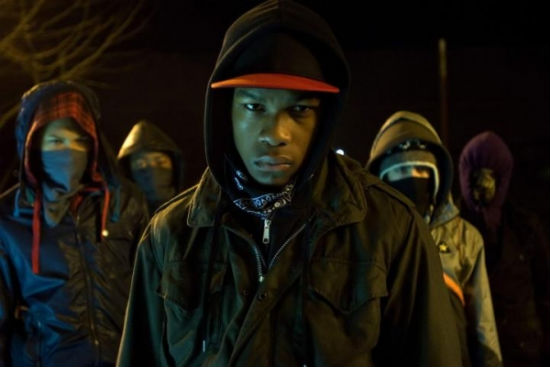
Genre – Action/Comedy/Sci-fi
Production company – Studio Canal
Distribution – £1,133,859 (UK
Main character characteristics – John Boyega: Violent/Natural leader/ Emotionless/Fierce
Semiotics - Hood up/Hate/Scarf used as balaclava/Black clothing
Semiotics - Hood up/Hate/Scarf used as balaclava/Black clothing
Subscribe to:
Posts (Atom)